
Broken Heart
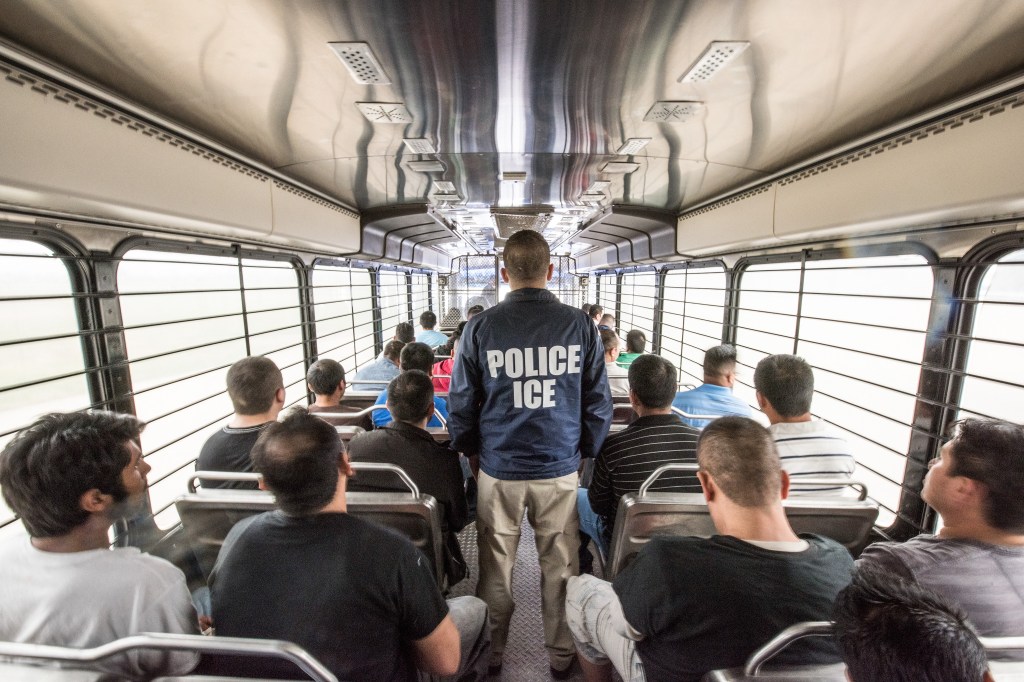
As I wade through news cycle after news cycle of Immigration and Customs Enforcement (ICE) and United States Customs and Border Patrol (CBP) operations in cities where immigrant populations abound, my heart breaks for two categories of people in this scenario.
One, my heart breaks for the innocent immigrant who has spent the better part of his or her life striving for the American Dream. These law-abiding nomads flee cartel war-torn areas in the Americas for a safer abode in the United States, where they plan to practice their faith in peace, work in peace, and live in peace. Most of them never commit crimes, never get speeding fines, and never litter. They bring with them cultural practices that bind families together, enmeshing concepts of community and strength by unity and fortitude into a new and thriving environment. Wherever they land, wherever they work—as contractors, cleaners, farmers, business owners, medical professionals, or clergy—these immigrants perform at the highest possible level so as not to attract unwarranted hate from locals who live, at times, in the grey of life, purposeless or with less purpose than the new arrivals.
You see, when you are born into the place others dream about, you have less drive, less hope, and fewer dreams than those who cross hundreds, if not thousands, of miles to get where you are just to have a fraction of the civil liberties you take for granted. It is these people—the mothers, fathers, daughters, brothers, husbands, wives, lawyers, doctors, mechanics, and whatnot—who trek through a blistering desert in search of new beginnings and uncertain futures. Undeterred by the challenges they will face, they do this to give themselves, but more likely their next generation, a chance at a better life. They spend years, even decades, striving for a better life. They pay their taxes, follow the laws, and observe local cultural customs to the best of their abilities. They sing along when the national anthem plays on TV, and they even don shirts with the American flag to show their patriotism to a nation that seldom recognizes their resilience as would-be citizens. These people are harmless.
And yes, as with any community, you see outliers: criminals, gangsters, offenders of children, fraudsters, and more. But the statistics on immigrant crime levels only clarify that these wandering souls are more law-abiding than nationals, who far outperform them in the crime sector. It is these people—the day-to-day, kind-hearted, wide-smiling, hard-working, reliable, law-abiding immigrants whose documented status has either lapsed or is unrecognized—that my heart breaks for. Millions are living in this gut-churning twilight zone. My heart shatters into a thousand pieces every time I read about their being rounded up by ICE and CBP. They’re thrown to the floor, bruised up, tasered, and later thrust into an unmarked vehicle where they’re fettered and transported to some unknown location to be interrogated and then deported to a nation and place they no longer call home.
Two, my heart breaks for the ICE and CBP officials who don a mask—not just the physical mask to protect and hide their identity while performing their duties, but the mask to hide their humanity. Sociologists have discovered that certain socially acceptable or legally allowed professions can lead a person to experience what is known as perpetrator-induced PTSD. This phenomenon is observed in jobs including, but not limited to, employees of an abattoir (slaughterhouse), where killing vulnerable and unsuspecting animals every day stunts the person’s empathy. Other professions where this occurs include prison-state executioners, the military, and law enforcement or community policing, where, in some unfortunate circumstances, you are required and sanctioned by the state to kill.
The initial and potentially continual enactment of violence, to whichever extreme, leaves a mark on the recipient of that violence; interestingly, it also leaves an unmistakable scar on the person or persons who perform acts of violence. Symptoms include, but are not limited to, experiencing hallucinations, disassociation, nightmares, lapses in memory or blackouts, paranoia, violent outbursts, personality changes, and disrupted sleep patterns. As with these professions, if prolonged, these problems can lead the individual to live with hopelessness, regret, depression, suicidal ideations, rapid weight gain or loss, changes to libido that are abnormal and harmful, obsessive behaviors, and more.
It is safe to say that I am happy humans are born with a defense mechanism that reminds them of the dangers of performing violent acts. I do not want to live in a world where human beings can do hideous things, sleep, and repeat as if nothing happened. Eventually, and thankfully, these violent deeds catch up to us all. As time will show, these deeds—namely, the sequestration, humiliation, devastation, and eventual deportation of innocent immigrant people—will catch up with ICE and CBP officers. One cannot live with the guilt associated with destroying innocent lives, even if that destruction is mandated and sanctioned by one’s immediate superiors and the federal laws of one’s respective nation.
Violence begets violence, and the cycle continues. Once every immigrant is removed from the equation, these violent men and women will turn their ire, their damaged personalities, and their emotionally stunted brains on the people they love. Eventually, spousal abuse and inter-community violence—namely, violence between law enforcement agents—will abound. It happens in every scenario where violence is rewarded and humanity—namely, compassion, mercy, and justice—is suppressed. Russian soldiers eventually turned on each other in the theatre of war against the Nazis. Nazi soldiers eventually turned on each other when the weaker (or perhaps stronger) among them opted out of executing innocent Jews. The punishment for failing to kill the innocent was death. And American Delta soldiers returning to Fort Bragg, after years of indiscriminate killings in Iraq and Afghanistan, end up killing each other on or around base, or peddling drugs for the cartel, and, as a consequence, suffering harm and death at the hands of the cartel while living on base. Violence begets violence. And ICE and CBP are not immune to this social ill.
These officials of the state, enactors of violence and harm, will eventually find the need—the existential need—to find forgiveness for their crimes against humanity in a material sense, and their sins against God in a spiritual sense. Earthly legality may afford them a long life outside the reach of the law, but God does not allow people to live in peace when their hearts are weighed down with guilt: guilt of hate, of greed, and of murder. Therefore, these men and women in masks, military gear, and the backing of the state will eventually find themselves at the doorsteps of a church where they will seek repentance and restoration.
And this potential sequence reminds me of a similar happening in church history.
Persecution of Christians In Ancient History
In 3rd-century North Africa, specifically Carthage, there existed Christians who suffered waves of state-sponsored persecution because they refused to pay homage to Roman deities, a legal and civic requirement of all citizens of Rome. Emperors Decian (249-251 C.E.) and Valerian (253-260 C.E.) faced waves of social unrest in the Roman Empire. Enemies attacked from the West, and Rome attempted and failed to reconquer lost sections of its reach in the East. Financial instability ravaged the inner networks of Rome, turning law-abiding citizens into conspirators against their King. Riots and unrest grew in the world’s most ruthless empire. The God-Kings, Emperors of Rome, could not sit idly by as these things happened. As a result, in one of their attempts to reestablish calm and peace, they sought to re-establish and revitalize the empire’s devotion to their pantheon of gods. Laws were passed and enforced that required every citizen in Rome to pay homage and worship Roman deities of the cosmos, fertility, war, and agriculture. Those who failed to honor these edicts had their civil rights denied, their property confiscated, their liberty suppressed, and their life, in some cases, ended.
Christians (and in some instances Jews) faced the brunt of Roman ire. Christians refused to honor Caesar as god, and they refused to worship anyone other than Jesus. Everyone was required to worship these deities, and, upon the completion of this public act, they were to attain an official document called a libellus (plural: libelli), which confirmed their participation in the civic religion of the Empire. If Christians were apprehended without these documents, they were arrested and forced to participate in worship to attain them. Those who refused were incarcerated. If, upon being incarcerated, they refused to worship these idols, they were penalized in numerous ways. Those staunch defectors were killed publicly to thwart further subversion. And if you, under duress, performed the religious rituals and rites, you were freed and given a libellus and sent on your way as a good law-abiding citizen of Rome. Within the Christian community, however, you were seen as a traitor because the act of idol worship was seen and understood as a betrayal of Christ. You had bent the knee to the gods of Rome to save your possessions and life.
Christians who refused to honor Roman deities were seen as apostates. Because to deny the rulership and sovereignty of Roman gods was to be called an atheist or an apostate.
Some Christians, perhaps more prudent than most, doctored their libelli or purchased fake ones to pass Roman checkpoints without being harassed. These Christians were called libellatici (certificate-buyers) because they refused to deny Christ and made purchases of these false documents to showcase, publicly, that they had bent the knee to Caesar and his gods, but privately, they still honored Christ. And others, who had actually bowed to Roman deities, denying Christ in their hearts, were called sacrificati (actual sacrificers).
Now, you can imagine the turmoil, the uproar, and the potential for riot and violence in the church of Carthage and surrounding Christian communities in North Africa when lapsed (or traitor) Christians walked into the church after having either made sacrifices to Roman deities or purchased documents to say that they did. Imagine this camp on one side, and on the other, the loyalists who lost civil liberties, rights, property, public standing, jobs, equipment, life-long professions, boats, and homes, and in some cases, lost their lives or family members who were publicly executed for refusing to worship Roman deities.
Bringing these two camps into the church, the loyalists and the traitors, created a schism so strong that we have records of these infightings and arguments to this day.
There then existed laxists and rigorists. Laxists were clergy who were lax about re-admitting traitorous Christians into the church. They thought a simple act of public contrition or public apology (exomology) was enough to reintegrate these lapsed Christians into their community. Rigorists, on the other hand, either wanted nothing to do with the traitors or required the strictest codes of contrition, penance, and more, for years, before the traitors or the lapsed could be reintegrated into the body of Christ. Rigorists demanded that the lapsed be re-baptized because their initial baptism (public profession of faith in Jesus by being baptized) was annulled by the act of betrayal and apostasy in favor of comfort and safety. The question and doctrine of baptism gained a new meaning, and further discussions and councils were held to determine the value, purpose, longevity, and soteriology behind baptism itself.
The church was split on the state and status of the lapsed, the ones who sacrificed to Roman gods, and those who purchased documents saying they offered homage to Roman gods.
And between the laxists and rigorists stood St. Cyprian of Carthage (210-258 C.E.), a local bishop whose middle-ground approach to lapsed Christians redeemed this era’s turmoil and led the way for many Christians in the ages to come.
On the libellatici (certificate buyers) in states:
“Since there is much difference between those who have sacrificed, and those who have received a certificate of having sacrificed… the cases of each have to be examined… and the cause of the sin, and the will, and the necessity, and the time, have to be weighed.” — Epistle 51
And on the sacrificati (actual sacrificers) he says:
“For those who have polluted their hands and mouths with sacrilegious contact… repentance is to be prolonged, and the grief of immediate satisfaction is to be extended… and they are to be helped only in the case of [imminent] death.” — Epistle 53
To the laxists, who were too quick to reintegrate lapsed (traitors or apostates) without properly determining the legitimacy of their repentance, he said:
“Returning from the altars of the devil, they draw near to the holy place of the Lord, with hands filthy and reeking with smell, still almost breathing of the plague-bearing idol-meats… before their sin is expiated, before confession has been made of their crime… they intrude on the body of the Lord, and violence is offered to His body and blood.” — De Lapsis, Chapters 15–16
And he speaks further on the need for repentance, true repentance in light of the spiritual sin of apostasy:
“I entreat you, beloved brethren, that each one should confess his own sin… while his confession may be proved, while the satisfaction and remission made by the priests are pleasing to the Lord. Let us turn to the Lord with our whole heart, and, expressing our repentance for our sin with true grief, let us entreat God’s mercy. Let our soul lie low before Him… To a deep wound let there not be wanting a long and careful treatment; let not the repentance be less than the sin.” — De Lapsis, Chapters 28–35
And lastly, St. Cyprian speaks on the fact that it is God and not local bishops (religious leaders with extreme ecclesial and social authority) who determine the readmission of penitent and repentant Christians into the Church:
“We do not prejudge when the Lord is to be the judge; save that if He shall find the repentance of the sinners full and sound, He will then ratify what shall have been here determined by us. If, however, any one should delude us with the pretence of repentance, God… will judge of those things which we have imperfectly looked into, and the Lord will amend the sentence of His servants.” — Epistle 51 (To Antonian)
We see, even in the 3rd century, Christians struggled with the concept of sharing their worship spaces with people who have invalidated the faith for earthly comfort and status. They were torn between hate and disgust for the lapsed and, on the other hand, compassion and understanding, considering the pressures and consequences of refusing an edict from Rome. We tend to sensationalize stories of martyrdom and self-sacrifice in the West today, but these events—namely, harassment by the state, persecution, imprisonment, torture, ostracism, and public and often violent and lengthy executions—were brutal and demoralizing. It makes sense that the fleshly and survivalistic tendency of human biology and psychology overrules the idealist and spiritual fervor of a heroic death in the face of an unbeatable enemy like the Roman Empire. But on the other hand, the Church lionized and made hagiographies of regular brethren who walked the line of faith and lost their lives, without losing their dignity, for believing in Christ.
The concept of traitors being reintegrated into the church, and that being a major point of contention, is not new. It is possibly two thousand years old. Even the great apostle, Saul of Tarsus, struggled with his history as an initial persecutor turned radical for Jesus. You can imagine the fear he induced in local churches when they heard he, the pursuer, the bloodhound of the Jewish cadre of violence and religious extremism, was walking in and out of churches, not in search of Christians, but in hopes of spreading the name of the person he once sought to eradicate. People struggle with the concept of reintegrating traitors, lapsed or semi-lapsed Christians, or agitators who once hated but now love the name of Jesus.
The Lapsed Come Home
And this brings me to our actual predicament concerning ICE and CBP agents and their federal leaders. These people will eventually recognize their failures, how, in the pursuit of a paycheck and service to their local bodies of governance, they have, in fact, denied the humanity of God’s people and subjected fellow Christians (and non-Christians) to conditions of extreme loss, humiliation, and, in rare cases, death.
Not all ICE/CBP agents are believers, but many are, and many will be one day, and they will walk into the church in hopes of finding refuge in Jesus.
Do I believe these public servants are required to perform exomologies to be admitted into heaven? Perhaps not. I do not believe one needs to publicly confess their sins to a body of believers to attain salvation. Salvation is between them and God. However, if they’re going to be part of the Church, the body of Christ, I believe it is their earthly responsibility—a near existential requirement on their part, and perhaps of the Church that plans to admit them into the body of the faithful—that these agents, law enforcement officers, perform exomologies or public acts of penance to showcase, to the body and to the world, that their acts while under the badge were sinful deeds, demonstratively akin to the acts of the devil.
It is the devil, the accuser of the brethren, Lucifer, Satan, or the adversary, whatever you want to call him, who comes to steal, kill, and destroy. And these agents, historically and presently, are acting as employees of the devil as they seek out innocent people to steal their livelihoods, kill them if they resist, and destroy their lives and the lives of their families and community members. It is undeniable that ICE and CBP agents are selling their souls, presently, for cash and comfort, the same way Christians of antiquity sold their witness for comfort and peace.
A time is coming when these officials will flood churches in droves seeking repentance and community with God and His people, and we must be prepared, with open arms and certain conditions. Not conditions of forgiving sins, for only God forgives those sins, but conditions which remind the world that sins of murder, exploitation, and devastation are not welcome or accepted within the Church.
To be part of God’s family, one must be a new creation, not before, but as a result of trusting in Jesus. And that trust means one cannot remain, continue, honor, or pay respect to their former ways of being and living—namely, of chasing down innocent people in vulnerable communities to kill them or, if they survive the encounter, to destroy their families, and steal their finances and prospects of becoming financially stable, law-abiding people, who, in time, will become American citizens.
Christ does not call us to judge the world in an ultimate sense. The Church is the salt of the earth in the sense that it reflects the justice of God and lives righteously when the world is weighed by numerous demonic forces of imperial violence, greed, and inhumanity. The Church ought to be a beacon of hope in dire and dark times. And in times of peace, it must represent the joy and the longevity of peace in a world often crippled by war. Therefore, we do not actively judge the world; the world is measured by the justice of the Church. And when the church falters, the world has one less thing by which to be counseled or directed, thus allowing nefarious agencies to flourish with impunity.
But, as followers of Christ, collectively and also individually in our respective geographic and cultural environments, we are called to name and denounce actions of the state and agents of the state when they use their power to harm, abuse, destroy, and kill people made in the image of God. People who are guilty of trespassing invisible borders and committing the minor crime of entering a country without the proper documents or overstaying a visa, all in search of a better life.
The Church must and is spiritually obligated to condemn such actions, such philosophies, and policies that denigrate the humanity of those who are of a different race, shade, ethnicity, or nationality. This is not to say that the church stands against healthy and competent immigration laws. There are good immigration laws that protect the immigrant and the native. I am not speaking against these. I am speaking of a nation, the United States of America, in particular, because it was formed on genocide, chattel slavery, racism, nativism, and nationalism, and it flourished by exploiting numerous “undesirable” classes of people and nationalities. And this same nation, now under the leadership of a flawed, racist, and nationalist man, Donald Trump, seeks to root out, hunt down, destroy, kill, detain, and deport millions of innocent people (Christians among them) for the sake of a racially homogenous Empire.
The Caesars of antiquity sought to scapegoat Christians and Jews for the numerous problems in and of Rome. Today, Trump and his nationalist cronies, billionaires, and racist acolytes seek to scapegoat immigrants (especially those from Africa, East Asia, and Latin American nations). Oddly enough, the current administration is perfectly fine admitting and protecting Afrikaners, namely, white South Africans who despised Black South Africans and have used refugee status avenues to attain American landed status, in search of safer and whiter horizons in the United States of America. These morally bankrupt racists from South Africa have found a friend in Trump, but the law-abiding brown-skinned Christian immigrants from Central and South America are considered narco-terrorists and diseased people from shit-hole countries.
We do not live in a vacuum. Read the room. Read the history within and around that room.
Prepare now, as much as possible, for the eventual arrival of traitors who will, in time, become disenfranchised with their regime’s tactics and will, in time, seek redemption. Perpetrator-induced PTSD may be a Godsend, after all. They must abandon the badge, the gun, and the identity of persecutor if they are to serve Jesus. For one cannot serve both God and mammon; one cannot serve Christ and nationalism; God and the devil.
Speak up for those who cannot speak for themselves; ensure justice for those being crushed. – Proverbs 31:8 NLT
Currently Reading
Best Work



Display photo.
 Olivet Theory