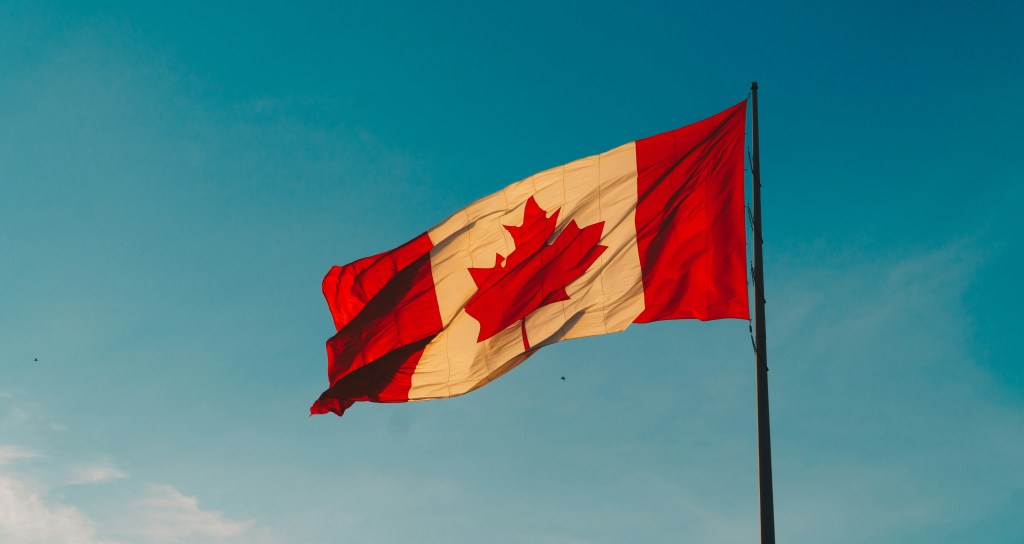
Canada Day produces in me, as well as the indigenous population of Canada, a sentiment of ambivalence and discomfort.
Canada celebrates its 157th birthday today, July 1, 2024, and as a result, it celebrates just how successful the British Empire was in establishing a beachhead on this continent, advancing its interests for the benefit of the monarch, and lastly, displacing the peoples who had lived here for generations if not thousands of years before them.
British North America Act, 1867
“An Act for the Union of Canada, Nova Scotia, and New Brunswick, and the Government thereof; and for Purposes connected therewith.
WHERES the Provinces of Canada, Nova Scotia, and New Brunswick have expressed their Desire to be federally united into One Dominion under the Crown of the United Kingdom of Great Britain and Ireland, with a Constitution similar in Principle to that of the United Kingdom.”
The British Empire bestowed upon a select number of provinces the freedom to govern themselves under the ministerial eyes of the English monarch. Truly, Canada to this day is called a member nation of the British Commonwealth, a soft-on-the-tongue terminology used to identify a nation-state that still recognizes the rulership of the British Empire whilst having the right to national identity and representation apart from direct interference from the Crown.
Let us remember that Canada Day is a majestic day of collective representation for white people in North America. This isn’t cruel nor disingenuous on my part as the founding documents of this nation, the ensuing ministers and the enforcing officers of such policies celebrate it as such. The Americas were never meant to be ruled nor governed by a sub-race or racial group. It is not a mistake that historically, those in power in the Americas have been, and for the most part, continue to be the descendants of Britain, France, Spain, Holland, and Portugal; predominantly and unequivocally white people groups.
Today, white people, albeit unbeknownst to them, celebrate the near-total annihilation of the indigenous groups that resided in these lands. In particular, the tribes that had settled in what we call Nova Scotia and New Brunswick.
I want to take a moment to recognize these tribes and peoples.
Mi’kmaq – indigenous to New Brunswick, Nova Scotia, Prince Edward Island, Quebec, and Newfoundland. They were displaced and forced to assimilate into European religions, standards, concepts, languages, and political ideals.
Maliseet – indigenous to New Brunswick and Nova Scotia. They were displaced and forced to assimilate into European religions, standards, concepts, languages, and political ideals.
Passamaquoddy – indigenous to New Brunswick and Nova Scotia. They were displaced and forced to assimilate into European religions, standards, concepts, languages, and political ideals.
Wolastoqiyik – indigenous to New Brunswick and Nova Scotia. They were displaced and forced to assimilate into European religions, standards, concepts, languages, and political ideals.
Elsipogtog – indigenous to New Brunswick and Nova Scotia. They were displaced and forced to assimilate into European religions, standards, concepts, languages, and political ideals.
The Beothuk – indigenous to New Brunswick and Nova Scotia. They were displaced and forced to assimilate into European religions, standards, concepts, languages, and political ideals.
The Innu – indigenous to New Brunswick and Nova Scotia. They were displaced and forced to assimilate into European religions, standards, concepts, languages, and political ideals.
The Mi’gmaw – are indigenous to New Brunswick and Nova Scotia. They were displaced and forced to assimilate into European religions, standards, concepts, languages, and political ideals.
These are just eight tribes or groups that we know of with historical and archeological evidence to support our findings that they were decimated, displaced, exiled onto government-sponsored ghettos now known as “Indian” reserves, and relegated to second-class status in Canada. People whose stories are too horrific and too numerous for me to recount.
Canada Day is the start of and the celebration of successful displacement and land theft, not to mention the near-total humiliation and devastation of Indigenous peoples in the initial provinces of this great (not in moral means but in size) nation.
And, these eight tribes are just the eight within this maritime region. The further inland we go, the further west we travel, the more lands and peoples disappear, vanish, become ghosts who haunt this land and the people therein as a sure reminder that human beings; men, women, and children; homes, communities, and whole societies existed here before outsiders were welcomed with open arms only to use that kindness as a beachhead for displacement and horror.
Canada Day is, remember, a day to celebrate the victors. The nation that won. The armies that triumphed. It is Victor’s History with fireworks, alcohol, jubilation, and pride of just how militaristically strong one’s ancestors were in almost completely massacring an entire indigenous population.
Yes, of course. I’ll posit that today’s Canada in 2024 is vastly different from 1867’s Canada. Yes. Today Canada is multicultural. People of all races are celebrated and welcome here. Indigenous groups are celebrated. The Canadian Charter of Rights and Freedoms affords me the right to think and express myself freely without fear of governmental repercussions against me. Hence my use of these liberties to freely critique the negative and morally questionable aspects and festivities of said nation.
Canada has made its progress but let us not mistake progress for change. Whilst we have the start of a multicultural society, we still have white people at the helm of this massive ship. We celebrate diversity here whilst celebrating the annihilation of indigenous peoples here. We celebrate the tribes and their many leaders and peoples whilst acknowledging that this land was taken from them by the Crown and given to the descendants of the British and French Empires.
We celebrate indigenous people by naming parks, mountain peaks, rivers, and streets after them. And, in the same breath, we name parks, mountain peaks, streets, universities, hospitals, and schools after the British and French men who were architects of the indigenous holocaust in Canada.
So a day such as this begs the question: What are we celebrating? And further yet, who ought to celebrate it?
White people who are devoid of historical facts and context will say, “Let’s just celebrate Canada Day together! It’s a day for all Canadians!”
Of course, because that is exactly what the descendants of a Victorious Empire would say. They have no other context in mind when it comes to this day. They have no ulterior understanding of the facts and formation of their nation. Their patriotism is based upon the foundation of imperialism and colonialism; a dire system to celebrate in its bare and simple state. So, to disguise the brutality of its foundation, white Canadians of British and French lineage decide instead to forego the century and a half of horrors, turn a blind eye to the misery of their neighbors who live in squalor, individualize their success whilst universalizing their enfranchisement and nationalization, all in the name and the need to rationalize to then dismiss the plight of everyone who suffered and died for them to celebrate the spoils of an Empire.
Frederick Douglass asked, “What to the Slave is the Fourth of July?” The answer, to the white American, was plain. It was the day in which white men in America celebrated their national independence from the grips of a greedy British Empire. This all occurred while a fifth of the nation’s population (Black people) and nearly half of its white population (white women) were denied personhood, liberty, and enfranchisement.
If the Fourth of July represents for Black Americans the dawn of freedom for the white man to rule over Black people and white women, what, then, does Canada represent for Indigenous peoples?
Perhaps you can mull over that question as you down your fourth beer, your second hotdog, your twelfth firework, and your third replay of Canada’s national anthem as you sing about pride, patriotism, and freedom on Indigenous lands.
O Canada!
Our home (on) native land!
True patriot love in all of us command.
With glowing hearts we see thee rise,
The True North strong and free!
From far and wide,
O Canada, we stand on guard for thee.
God keep our land glorious and free!
O Canada, we stand on guard for thee.
O Canada, we stand on guard for thee.
Speak up for those who cannot speak for themselves; ensure justice for those being crushed. – Proverbs 31:8 NLT
Currently Reading
Best Work


Display photo.
 Olivet Theory